
Hiring the wrong tile contractor can turn a straightforward bathroom remodel or kitchen backsplash project into a months-long headache of cracked grout lines, hollow-sounding tiles, and water damage you won't discover until it's behind the drywall. If you're searching for a tile contractor in San Diego, you're not just picking someone who can cut porcelain, you're vetting a professional whose workmanship decisions today will determine whether your floor still looks great in fifteen years. This decision affects your kitchen, bathroom, entryway, or outdoor living space for the next decade or more, so it deserves more scrutiny than most homeowners give it.
This guide walks through exactly what separates a qualified tile contractor from someone who simply owns a wet saw, what questions to ask before signing a contract, how to read a bid line by line, and what San Diego's unique coastal climate and building stock mean for your specific installation.
Why Hiring the Right Tile Contractor Matters More Than the Tile Itself
Homeowners often spend weeks agonizing over which porcelain or ceramic tile to buy, comparing colors and finishes at showrooms across San Diego, then hire the first contractor who returns a phone call. That's backwards. The material only performs as well as the installation underneath it. A skilled tile contractor controls variables most homeowners never think about: substrate flatness, thin-set coverage, movement joints, and moisture management, all of which determine whether your tile lasts decades or fails within a couple of years.
The Hidden Work That Determines Long-Term Performance
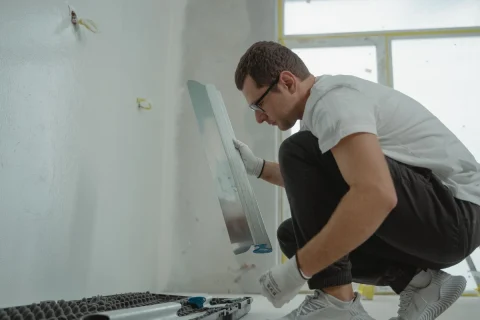
Most tile installation problems trace back to substrate preparation, not the tile itself. A qualified contractor checks floor flatness with a straightedge, addresses deflection in wood-framed floors, and selects the correct setting materials for the substrate and traffic load, work that's invisible once the job is finished but decides whether your investment holds up. Skipping any of these steps rarely shows up on day one; it shows up eighteen months later as cracked grout or tiles that sound hollow underfoot.
Key fact: ANSI A108 standards require thin-set mortar coverage of at least 95% in wet areas (like showers) and 80% in dry areas. Contractors who rush this step leave voids under the tile that cause cracking and hollow spots down the line.
Credentials and Licensing Every San Diego Homeowner Should Verify
California requires a C-54 (Tile) or B (General Building) contractor license for most tile installation jobs over $500 in labor and materials. Before you let anyone step foot in your home, verify their license through the Contractors State License Board, confirm it's active and in good standing, and check that their bond and liability insurance are current. This takes about five minutes online and can save you from a costly dispute later.
Questions to Ask Before You Sign
- How long have you been licensed specifically for tile work, versus general remodeling?
- Can you provide addresses of past San Diego installations I can view in person?
- What brand and type of setting materials and membranes do you use, and why?
- Do you carry workers' compensation insurance for every crew member on site?
- Who pulls the permit, and does the job require a building inspection?
A contractor who hesitates or gets defensive about any of these questions is telling you something important. The good ones answer immediately, because they've been asked before and have nothing to hide. If anything, an experienced contractor will often volunteer this information before you even ask.
Understanding San Diego's Climate Impact on Tile Installation
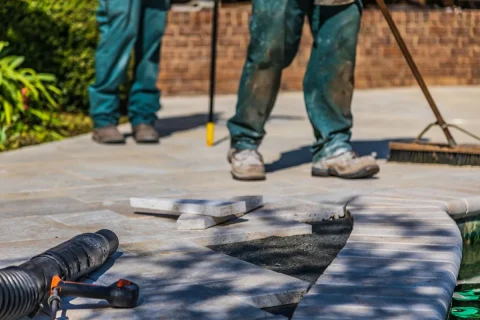
San Diego's marine environment presents installation challenges that inland contractors may not fully account for. Salt air accelerates degradation of natural stone tile far faster than it affects porcelain, which matters if you're considering travertine or limestone for an outdoor patio near the coast in neighborhoods like Point Loma, La Jolla, or Ocean Beach. A contractor who primarily works inland, say in El Cajon or Santee, may not have hands-on experience with how quickly salt exposure can etch and pit certain natural stones.
Seismic Considerations and Movement Joints
Southern California's seismic activity, combined with thermal cycling from our wide day-to-night temperature swings, makes proper movement joints and isolation membranes essential, especially for large-format tile. An experienced tile contractor will install expansion joints at appropriate intervals and use uncoupling membranes rather than skipping this step to save time. Without these joints, even a well-installed floor can develop stress cracks as the slab shifts slightly over years of minor seismic activity and temperature-driven expansion and contraction.
Pro tip: If you're tiling near the coast, ask your contractor specifically how they plan to protect natural stone from salt air exposure, or whether porcelain (with water absorption under 0.5%, compared to ceramic's 3-7%) is the smarter long-term choice for that space.
Large Format Tile: Why Installation Technique Changes Everything
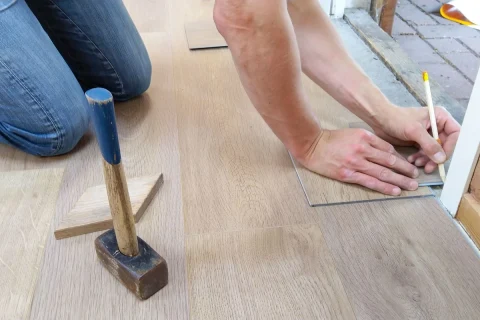
Large-format tile, generally 18x18 inches and up, has become one of the biggest trends in San Diego kitchens and living spaces, prized for its minimal grout lines and clean, modern look. But it demands a completely different skill set than standard 12x12 tile. Large format installation requires back-buttering (applying thin-set to both the substrate and the back of the tile) and, in most cases, an uncoupling or isolation membrane to accommodate substrate movement without transferring stress to the tile itself.
A contractor who quotes large-format tile at the same price and timeline as standard tile, without mentioning back-buttering or membranes, likely hasn't done enough of these installations to understand the added labor involved. Lippage (uneven edges between adjacent tiles) is one of the most common complaints homeowners have after a large-format installation, and it almost always traces back to a contractor rushing the leveling process or skipping tile leveling clips. This is exactly the kind of detail worth asking about directly during your estimate walkthrough.
Reading Bids: What Separates a Fair Price From a Red Flag
Installed tile costs in the San Diego market typically run $8 to $25 per square foot in labor, with material costs ranging from $2 to $30 per square foot depending on the tier of tile you select. A bid that comes in dramatically below this range is worth scrutinizing closely, it often signals corners will be cut on substrate prep, setting materials, or crew experience. On the flip side, a bid far above this range isn't automatically better, so it pays to ask what exactly justifies the premium.
What a Detailed, Trustworthy Bid Includes
- Itemized labor and materials, not a single lump-sum number
- Specific brand names for thin-set, grout, and any membranes used
- A written timeline with start and completion dates
- Payment schedule tied to project milestones, not a large deposit upfront
- Warranty terms for both labor and materials
Key fact: Grout joint width matters for both appearance and durability. Rectified tile (cut precisely to uniform size) can be set with joints as narrow as 1/16 inch, while standard, non-rectified tile needs 1/8 to 3/16 inch joints to accommodate slight size variation. A contractor quoting narrow grout lines on non-rectified tile is setting you up for lippage and uneven edges.
Slip Resistance and Traffic Ratings: Details a Good Contractor Won't Skip
Not every tile belongs in every room. The Porcelain Enamel Institute (PEI) rates tile durability from Class I (wall-only use) to Class V (built for heavy commercial foot traffic), and a knowledgeable tile contractor will steer you toward the correct rating for entryways, kitchens, or high-traffic hallways rather than letting you fall in love with a decorative tile that will scratch and dull within a year.
For wet areas like showers, bathroom floors, and outdoor patios, dynamic coefficient of friction (DCOF) matters just as much as style. ANSI A137.1 recommends a wet DCOF rating of at least 0.42 for these spaces. A contractor who can speak knowledgeably about PEI and DCOF ratings, and who steers you away from a beautiful but slippery tile for your shower floor, is protecting you from a liability and a return trip to fix a mistake. This is especially relevant for pool decks and outdoor patios, which are common in San Diego's year-round outdoor living culture.
What to Expect Once the Project Begins
A well-run tile contractor will walk you through a realistic timeline before demolition ever starts. A typical bathroom floor and shower retile might take five to seven working days from demo to grout cure, while a whole-home flooring project can run several weeks depending on square footage and whether cabinetry or plumbing fixtures need to be removed and reset.
Setting Realistic Expectations on Timeline and Disruption
Ask your contractor directly how many crew members will be on site each day, whether they work on multiple projects simultaneously (which can stretch your timeline unexpectedly), and how they plan to protect the rest of your home from dust during demolition. Reputable contractors use plastic sheeting and negative air pressure setups for larger jobs, particularly when demo involves removing old tile or thin-set that could contain silica dust.
Curing time is another detail worth confirming upfront. Thin-set typically needs 24 to 48 hours before grouting, and grout itself needs to cure before the area sees regular foot traffic or water exposure, generally another 24 to 72 hours depending on the product used. A contractor who promises a full shower retile finished and ready for daily use within 48 hours, start to finish, is likely skipping proper cure times.
California Title 24 and Radiant Heat Installations
If you're planning radiant-heated tile floors, a popular upgrade for San Diego's cooler coastal evenings, your contractor needs to understand how California's Title 24 energy code applies to the installation. This affects everything from the type of heating element used to how it's integrated with the thermostat and insulation beneath the tile. This is a specialty skill set, and it's worth asking directly whether your contractor has installed radiant systems before, not just standard tile floors, since an incorrectly wired or insulated system can drive up energy costs without meaningfully improving comfort.
Getting Started: Your Next Steps
Finding the right tile contractor in San Diego comes down to verifying credentials, asking pointed questions about setting materials and technique, and reading bids critically rather than choosing based on price alone. Request to see completed projects in person when possible, particularly if you're working with large-format tile, natural stone near the coast, or radiant heat systems, since these all require specialized experience beyond a standard tile install.
Take the time upfront to interview at least two or three contractors, compare their answers to the questions above, and trust the one who explains their process in detail rather than the one who simply quotes the lowest number. A well-installed tile floor, backed by proper substrate prep, correct setting materials, and attention to San Diego's climate conditions, is an investment that should last for decades rather than years, and the right tile contractor is the single biggest factor in making sure it does.