What Does "Rectified" Mean in Tile?
Rectified tile is tile that has been mechanically cut or ground after firing to achieve precise, uniform dimensions with perfectly straight, clean edges. The term comes from the Latin "rectus" meaning straight, and that's exactly what it delivers.
After a tile is fired in the kiln, it can shrink unevenly, resulting in slight size variations between tiles in the same production run. Standard (non-rectified or "pressed edge") tiles are left as-is after firing, with their natural, slightly rounded or irregular edges. Rectified tiles undergo an additional manufacturing step where diamond blades trim each tile to exact, uniform dimensions.
Rectified vs Non-Rectified: The Key Differences
Edge Quality
Rectified tiles have sharp, precise, 90-degree edges, like the clean edge of cut glass. Non-rectified tiles have slightly cushioned, rounded, or irregular edges that are a natural result of the pressing and firing process.
Size Consistency
Rectified tiles are machined to exact dimensions. If you buy a 12×24-inch rectified tile, every tile in the box will be precisely 12×24 inches. Non-rectified tiles can vary by 1-2mm between individual tiles, which is normal and within manufacturing tolerances.
Grout Joint Width
This is the biggest practical advantage: rectified tiles can be installed with very narrow grout joints, as tight as 1/16 inch (1.5mm). Non-rectified tiles typically require at least 3/16 inch (5mm) grout joints to accommodate size variations. The result is a dramatically different finished look.
Why Narrow Grout Lines Matter
The visual impact of narrow grout lines is substantial:
- Seamless appearance: Narrow joints create a nearly continuous surface, especially when paired with color-matched grout.
- Modern aesthetic: Clean, tight grout lines are a hallmark of contemporary design.
- Less grout to maintain: Less grout surface area means less cleaning, less staining, and less maintenance over time.
- Better for large format tiles: Wide grout lines on large tiles can look disproportionate and detract from the tile's visual impact.
Important Considerations
Installation Precision
Rectified tile's precise edges are unforgiving. Any variation in the substrate, any slight lippage between tiles, any inconsistency in grout line width is immediately visible. This means:
- The substrate must be extremely flat
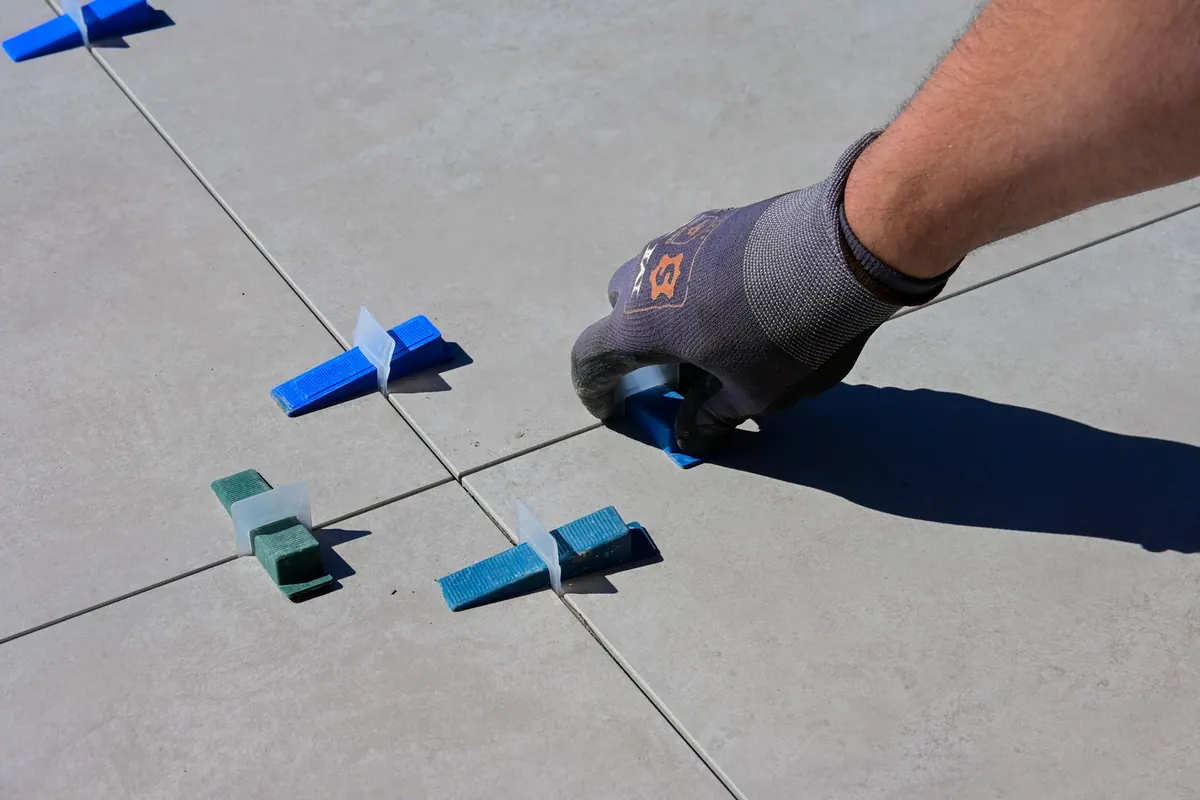
- A tile leveling system is strongly recommended
- The installer must have experience with tight-joint installations
- There's zero room for error in layout and spacing
Grout Joint Minimums
While rectified tiles can be installed with very narrow joints, the TCNA still recommends a minimum grout joint of 1/16 inch. Many experienced installers, including our team at Tile San Diego, recommend at least 1/8 inch even for rectified tiles. A minimal grout joint is still necessary to allow for slight thermal expansion and to ensure grout adhesion.
Chipping Risk
Rectified tiles' sharp edges are more susceptible to chipping during handling and installation compared to the cushioned edges of non-rectified tiles. Careful handling and proper storage are essential.
Cost
Rectified tiles are generally 10–20% more expensive than their non-rectified equivalents because of the additional manufacturing step. Installation may also cost more due to the greater precision required.
When to Choose Rectified Tile
- Modern, minimalist, or contemporary design aesthetics
- Large format tiles (15+ inches) where narrow grout lines enhance the look
- Porcelain tiles mimicking natural stone or wood (narrow joints enhance realism)
- Feature walls and shower surrounds where a seamless look is desired
- Commercial spaces seeking a high-end appearance
When Non-Rectified May Be Better
- Rustic, traditional, or Mediterranean design styles where wider grout joints are part of the aesthetic
- Budget-conscious projects
- DIY installations where precise spacing may be challenging
- Tumbled or textured tiles where the natural edge complements the look
- Small mosaic tiles where grout lines are an intentional design element
Rectified Tile and Design Trends in Southern California
In San Diego, the trend toward large format, rectified porcelain tile has been growing steadily. Homeowners increasingly want that seamless, modern look, whether it's a wood-look porcelain plank with hairline grout joints in a coastal Del Mar home or a marble-look rectified porcelain in a La Jolla bathroom.
At Tile San Diego, we install rectified tile across San Diego daily. Our team has the precision tools and experience to deliver the tight, consistent joints that rectified tile demands.
The Bottom Line
Rectified tile isn't inherently "better" than non-rectified, it's a manufacturing treatment that enables a different aesthetic. If you want narrow grout lines, modern clean looks, and are willing to invest in quality installation, rectified tile is the way to go. If you prefer a more traditional look or are working within a tighter budget, non-rectified tile performs beautifully.
Not sure which is right for your project? Contact Tile San Diego. We'll help you make the right choice for your San Diego home.